What Asheville property owners actually pay
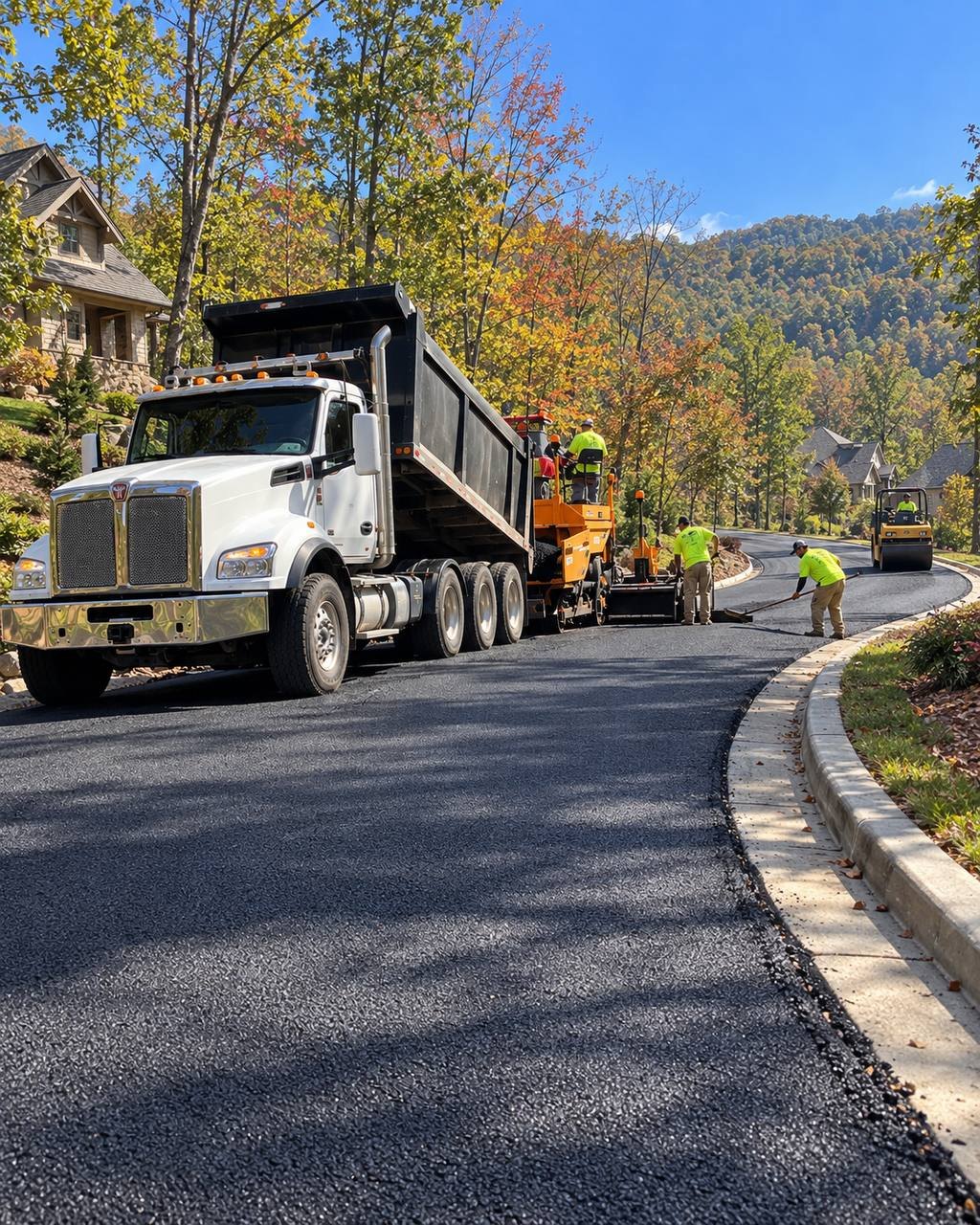
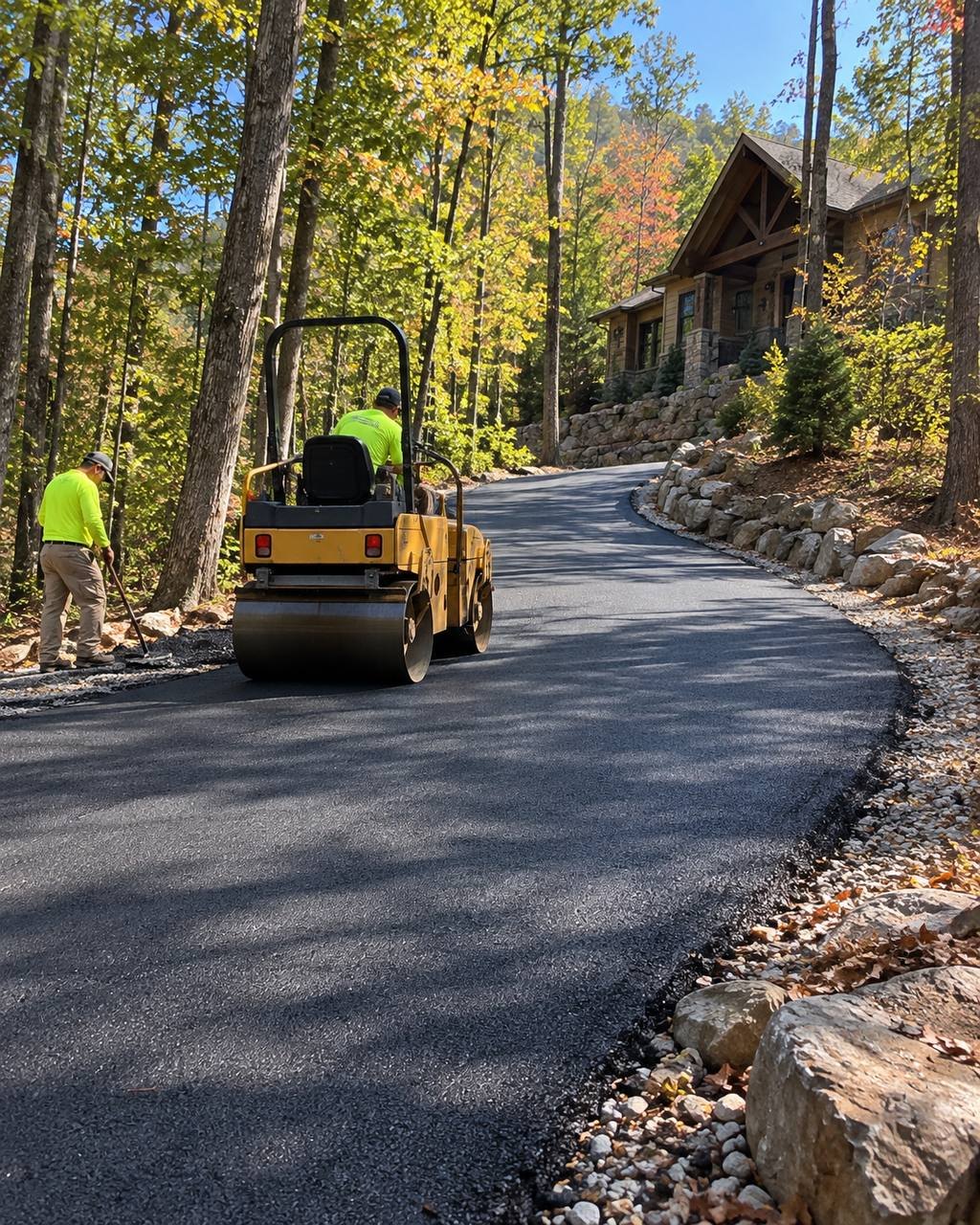
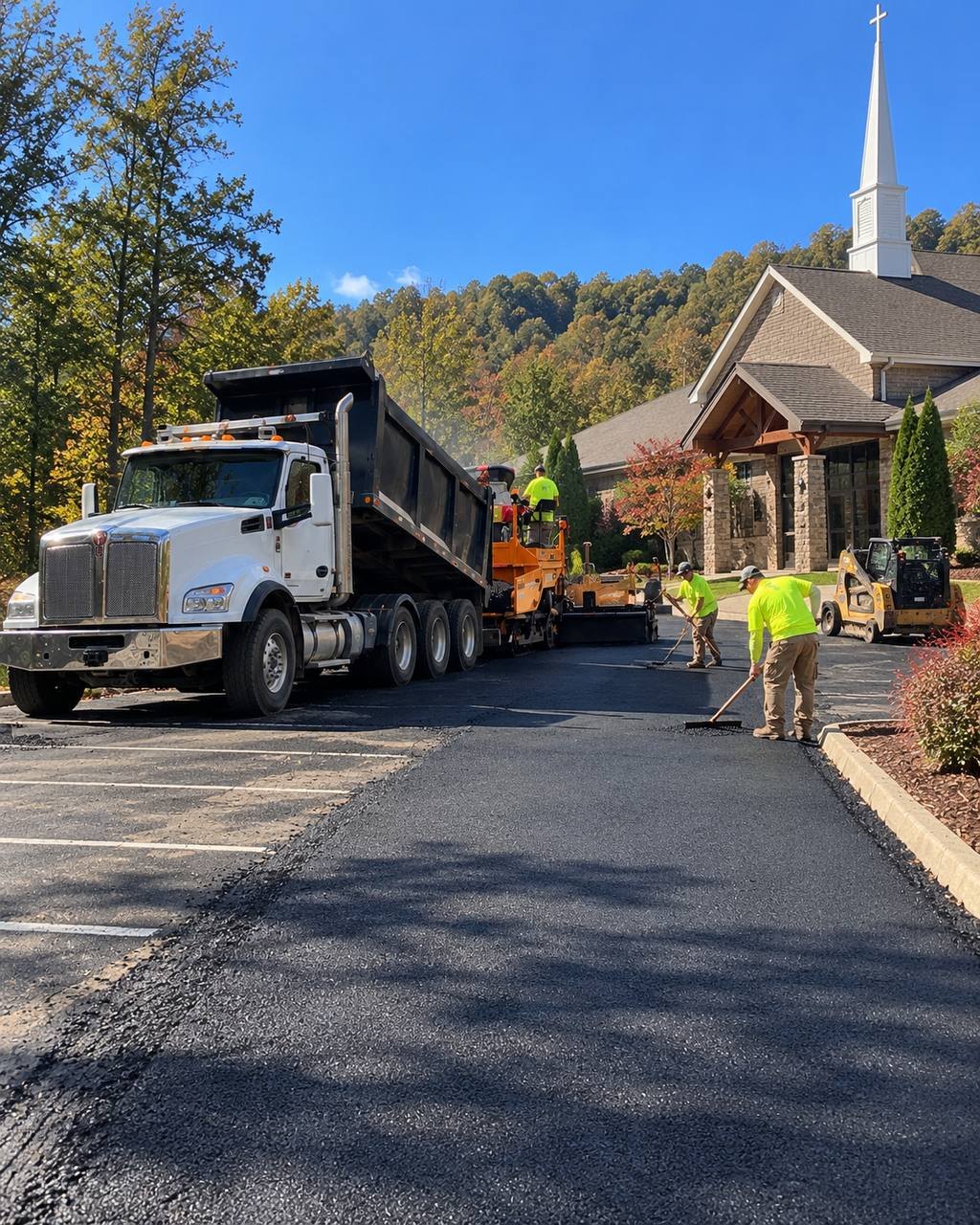
Church lots off Merrimon Avenue, HOA surfaces folded into the hillsides of Kenilworth, and small retail properties near the River Arts District do not price the same as flat strip-mall asphalt in the Piedmont. Buncombe County lots live on grade, and grade means drainage — and drainage means a line item that national estimator sites never build in.
The per-square-foot figure depends on scope. Sealcoat and crack-fill is a maintenance category, not reconstruction; it belongs in a separate budget line. The ranges below cover work that changes the surface or the base beneath it:
| Scope of work | Typical Asheville range | What drives it |
|---|---|---|
| Mill-and-overlay (2 in.) | $2.50 – $4.25 per sq ft | Existing base condition, lot age |
| Full-depth replacement | $4.50 – $7.50 per sq ft | Base failure depth, grading, drainage |
| New lot on graded base | $4.75 – $7.50 per sq ft | Site slope, drainage tie-in, utilities |
| Sealcoat and crack-seal | $0.18 – $0.45 per sq ft | Surface age, crack density (maintenance only) |
| Striping and ADA repainting | $0.08 – $0.25 per sq ft | Space count, lot configuration |
For complete projects — base work, new asphalt, drainage correction, striping, and ADA spaces — total budgets generally fall here:
- Small lot (10 spaces): $18,000 – $45,000
- Medium lot (30–40 spaces): $50,000 – $120,000
- Large lot (75–100 spaces): $130,000 – $280,000
A firm number before a contractor walks the lot and checks where water moves after a hard rain is an assumption, not an estimate. See our full parking lot paving guide for what a proper site assessment should cover.
How Buncombe County terrain and stormwater change the math
Asheville sits in a bowl where multiple ridgelines funnel runoff onto commercial and institutional properties every time a significant storm stalls over the Blue Ridge. The federal record reflects that: 19 federally declared disaster events touch Buncombe County (1973-2026), most of them storm- and flood-related. For paved surfaces, that history shows up as base saturation, heave-and-settle cycles, and drainage failures that erode asphalt from below long before the surface shows it.
Two cost factors are specific to this terrain and rarely appear in quotes from out-of-region contractors:
- Slope drainage engineering. A lot that drops more than two or three feet across its surface needs a designed drainage plan — catch basins, storm inlets, or perimeter swales — before new asphalt will hold. Laying pavement over an unresolved drainage problem shifts the failure two to five years out and often makes the second repair more expensive than the first would have been.
- Heavy-truck base failure. Church lots that double as event overflow, HOA surfaces that see regular garbage trucks, and any lot with delivery vehicle traffic need deeper base construction than passenger-car lots require. Where the base has already failed under that load, a mill-and-overlay is a temporary measure; full-depth replacement is the repair that holds.
Adding impervious surface — a new lot or a meaningful expansion of an existing one — can trigger stormwater management requirements under the City of Asheville's local program. North Carolina administers stormwater rules under delegation from the federal government; the U.S. Environmental Protection Agency sets the national minimums, and your contractor's estimate should identify whether your project crosses any applicable state or local thresholds before construction begins.
The four scopes: what each option actually buys
Most parking lot owners in Asheville are choosing between four levels of work. Where your lot falls depends on the age and condition of the base, how water currently drains off the surface, and what the pavement looks like now.
Sealcoat and crack-seal. A surface maintenance treatment, not a structural repair. If the existing asphalt is sound but oxidized and surface-cracking, crack-fill followed by sealcoat can extend the pavement another three to five years at $0.18 to $0.45 per square foot — the lowest-cost option by a wide margin. It cannot fix a failed base, and it will not hold on a lot that has already passed the threshold for reconstruction. Our Asheville sealcoating guide covers the surface conditions that make this scope worthwhile versus wasteful.
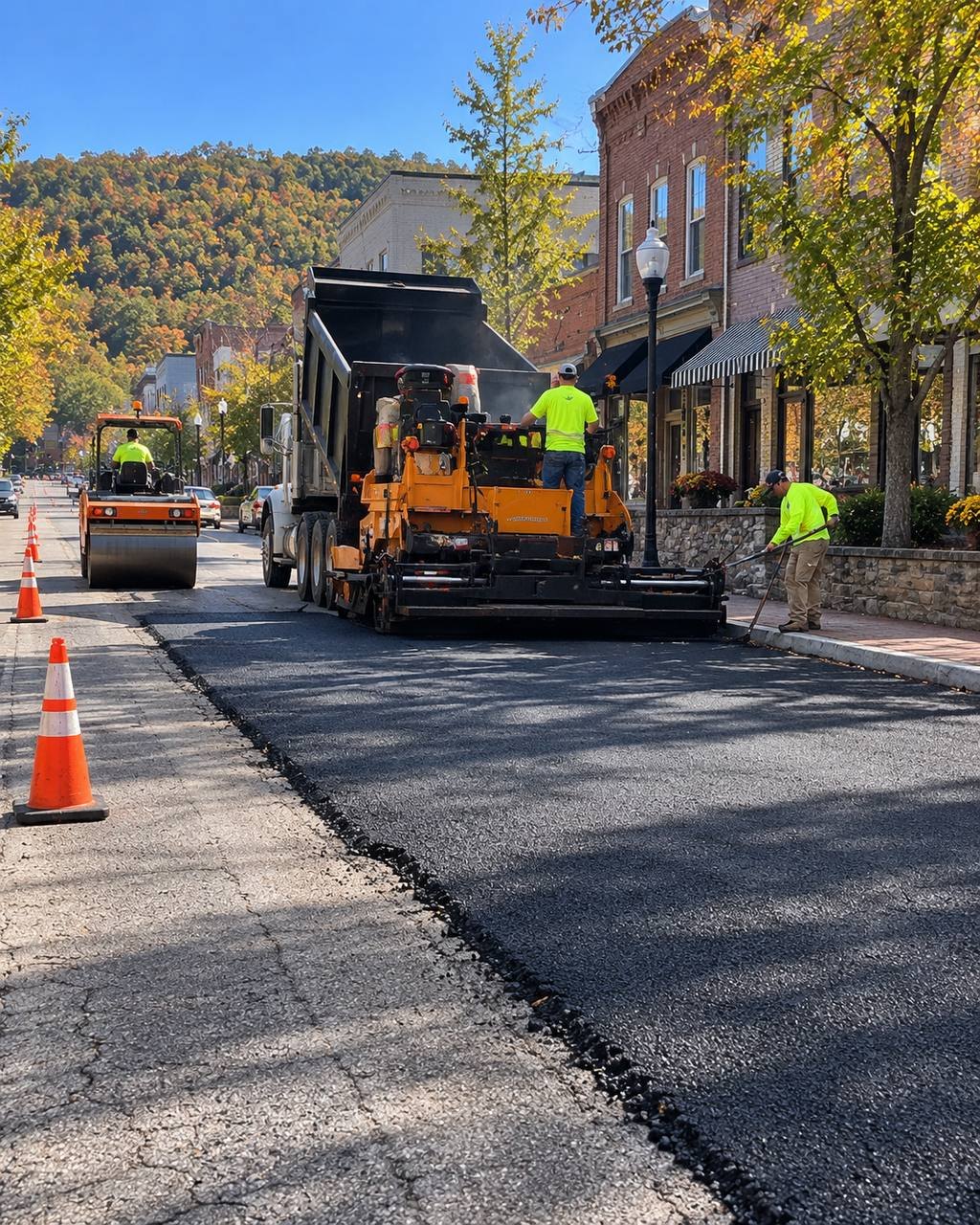
Mill-and-overlay. The crew mills off the top two inches of the existing asphalt and lays fresh material in its place. The right call when the base is intact but the surface has failed — common on lots paved in the 1990s that have been maintained but never rebuilt. Pricing runs $2.50 to $4.25 per square foot in this market, depending on surface area and how much base correction the edges need. Our asphalt resurfacing cost guide explains how contractors assess whether an existing base is sound enough to overlay.
Full-depth replacement. The asphalt and failed base material both come out. The section is regraded, compacted, and paved from the ground up — and this is the scope that can actually correct a drainage problem, because the grade gets reset during reconstruction. Pricing runs $4.50 to $7.50 per square foot, and it is the correct scope for any lot showing alligator cracking, soft spots underfoot, or failure patterns concentrated around heavy-vehicle paths.
New lot on a graded base. Gravel surfaces being paved for the first time, overflow parking additions, and new construction all price similarly to full-depth replacement at $4.75 to $7.50 per square foot. Site-grading work is the variable: a lot that already drains well and has stable subgrade costs less than a site requiring significant cut-and-fill before a base can go down.
Permits, ADA, and impervious-surface rules in Asheville
A parking lot in Asheville is not purely an asphalt question. Three regulatory areas affect what can be built and what a complete estimate must address.
NCDOT access permits. If the lot has a driveway connecting to a state-maintained road — common on US 70, US 25, and other numbered routes through Buncombe County — a driveway permit may be required before reconstruction that alters the access point. The North Carolina Department of Transportation administers these requirements, and applications go through the NCDOT Connect portal. A missing access permit can halt a job mid-pour. Your estimate should state clearly who is responsible for pulling it.
ADA-accessible spaces. Any parking lot reconstruction triggers the requirement that accessible spaces meet current Americans with Disabilities Act standards: no more than 2 percent slope in any direction, the correct number of van-accessible spaces scaled to total lot size, and compliant access aisles. Restriping alone does not satisfy compliance if the surface slopes are wrong — full-depth reconstruction is sometimes the only way to bring an older sloped Asheville lot into standard. The required number of accessible spaces is set by federal ADA standards and scales with total space count.
Stormwater and impervious surface. The City of Asheville enforces local stormwater ordinances, and projects that add or substantially alter impervious surface may require a stormwater permit or a post-construction management plan. North Carolina's program operates under delegation from the U.S. Environmental Protection Agency. An estimate that does not ask about your lot's total impervious footprint before quoting a new or expanded surface is leaving a compliance obligation unaddressed.
What a written estimate should cover
A written estimate for parking lot work in Asheville should do more than state a unit price. Before signing, verify these items are addressed:
- Drainage plan. Where does water go after paving? If the estimate has no answer, the site assessment did not ask the question.
- Base specification. Depth, stone type, and compaction standard. On sloped Buncombe County lots, this is the structural load-bearing detail — not a line to leave vague.
- ADA space layout. How many accessible and van-accessible spaces, and what slope measurements confirm the finished surface will comply?
- Phasing plan. If the business, church, or HOA must stay open during construction, the estimate should sequence work so a portion of the lot remains usable throughout. A contractor who has not planned for phasing has not planned for your operations.
- Permit responsibility. Who pulls the NCDOT access permit if one is required? Who files the stormwater documentation? Both should appear in the written estimate, not surface as assumptions after work starts.
Comparing bids that do not specify the same scope is comparing different jobs. A mill-and-overlay quote held against a full-depth replacement quote is a scope difference, not a price difference. Get the scope in writing before comparing numbers.